

How to Warm Up Target Accounts Before Outreach
Warming a target account means earning familiarity with its decision-makers, using your own first-party data and live buyer signals, before you ask for a meeting. The sequence is simple: connect the systems you already own, track what is changing at the account, engage the buyer with a short, relevant, peer-level touch, keep a human cadence, and hand off only when readiness is clear. Done by hand, it breaks at about 50 accounts. Kynzo, the AI Account Agent for Warm Outbound, assigns a dedicated agent to every target account to run that sequence for you.
Key Takeaways
- Warm outreach starts from your own data (CRM, warehouse, inbox, product usage, contact lists), not a scraped list.
- Signals such as hiring patterns, leadership changes and funding are context, not proof. Confirm them before you act on them.
- Use the A-A-O framework (Acknowledge, Add Perspective, Earn Familiarity) so every touch gives the buyer something before you ask for anything.
- Cadence matters as much as content: stay inside local business hours, vary timing and cap daily volume.
- Hand off at a defined readiness threshold, with the context attached, so the intro call starts warm.
Table of Contents
- What it means to warm up a target account
- The 4-stage warm outbound engine
- Stage 1: Connect the data you already own
- Stage 2: Track signals that tell you when and why
- Stage 3: Engage with the A-A-O framework
- Stage 4: Set a human cadence
- Know when an account is ready
- Common mistakes to avoid
- How Kynzo runs account warming
- Is cold email still worth running?
- FAQ
- Sources
What it means to warm up a target account
A cold touch comes from a stranger with no context. A warm touch comes from someone the buyer has already seen, whose point of view already felt relevant to their situation. The difference is not a clever subject line. It is the number of low-pressure, useful exposures the buyer has had before your first direct ask.
For a Seed to Series B team this matters for a practical reason. You rarely have a brand that opens doors on its own, and your target list is small enough that every burned account is expensive. Blasting a few thousand strangers from secondary domains trades long-term reputation for short-term volume. Warming does the opposite: fewer accounts, deeper context, more replies per touch.
One published benchmark shows why volume is the wrong lever. Saleshandy's analysis of 53.1 million cold emails sent between January and June 2026 puts the average cold email reply rate at 3.7% , measured as replies divided by emails delivered. Our own verified GTM benchmarks for warm outbound with Kynzo are a 3.8x reply lift versus cold email, +40% warm intro conversion and a 34% shorter sales cycle, with zero burner domains required.
If you want the broader motion this sits inside, our warm outbound sales playbook for B2B SaaS teams covers the full program. This article covers the account-level work in the weeks before the first ask.
The 4-stage warm outbound engine
We organize account warming into four stages. Each one has a failure mode, and that is where most teams lose accounts.
| Stage | What happens | Where teams go wrong | |---|---|---| | 1. Connect | Pull accounts and context from systems you own | Starting from a purchased or scraped list with no history | | 2. Track | Watch buyer priorities, hiring and job-change triggers, strategic initiatives | Treating a single signal as proof of intent | | 3. Engage | Use A-A-O in a peer voice at a human cadence | Templates that read as automation | | 4. Hand off | Score readiness, write back to the CRM, alert the rep | Handing over a name with no context |
The rest of this guide walks each stage as a working routine.
Stage 1: Connect the data you already own
Warming begins with accounts you have a reason to care about and a record you can trust. Your best sources are first-party:
- *CRM: past opportunities, closed-lost reasons, existing contacts and owner assignments.
- *Data warehouse: Snowflake, BigQuery or Databricks tables that join firmographics, billing and product events.
- *Email inbox: threads with former champions, prior conversations and who already knows someone on the account.
- *Product usage: free users or trial signups from the target company, which are the warmest signal you have.
- *Contact lists: event attendees, webinar registrants and newsletter subscribers.
The point is to find the people who have already touched you, and the accounts where you have a path, before spending effort on strangers. A closed-lost deal from a year ago, plus a new VP of Sales who joined last month, is a better starting point than any cold list.
Clean data is the unglamorous prerequisite. Duplicate accounts, stale contact roles and missing owners make every later step noisy. If your CRM hygiene is the bottleneck, CRM and lead automation is a good place to see how contact roles and multichannel follow-up can be organized in one workflow.
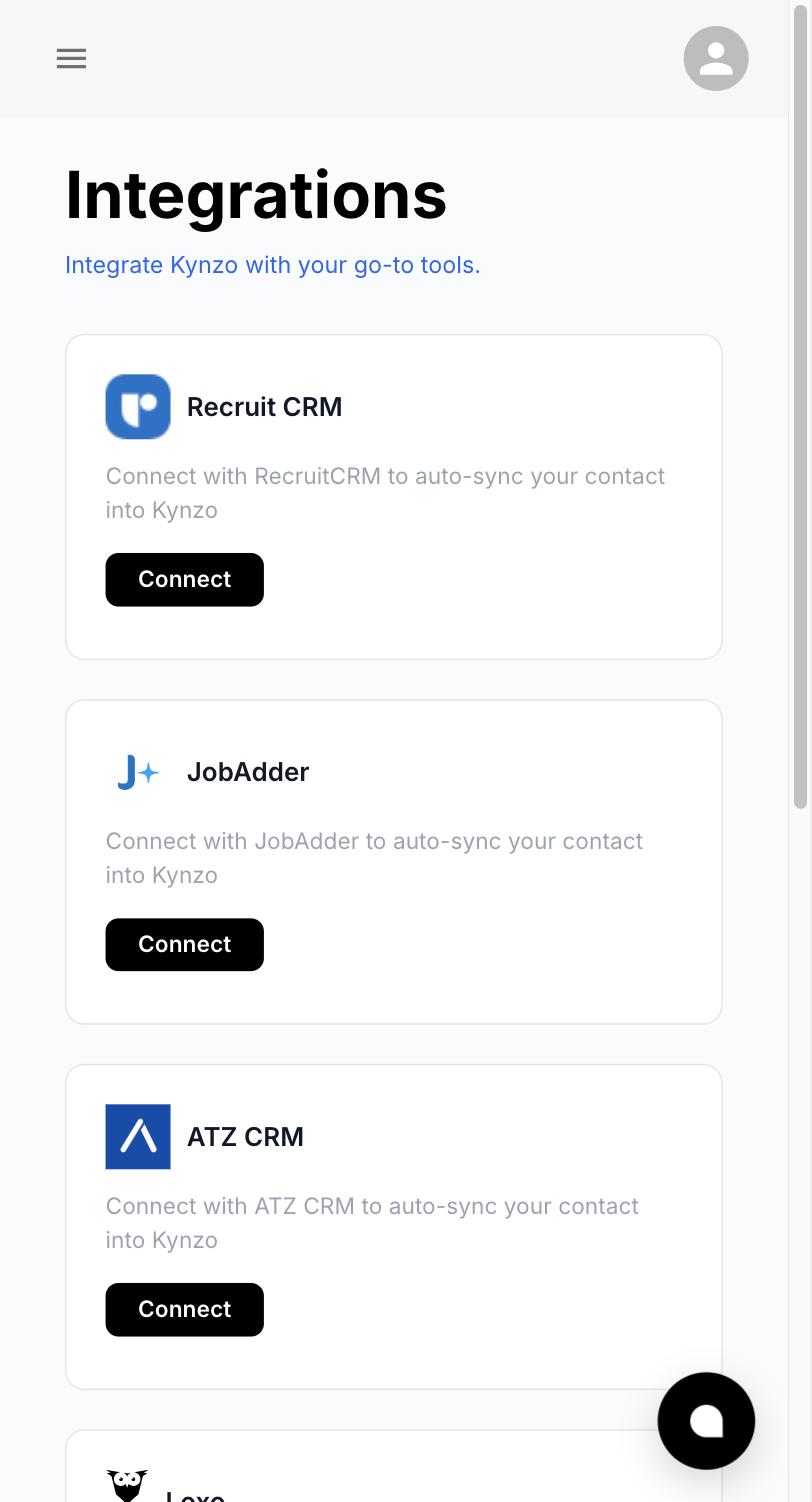
Kynzo connects to your CRM, data warehouse, email inbox, product usage and contact lists, then assigns a dedicated AI Account Agent to every target account. For the mechanics of the CRM side, see our guide on connecting LinkedIn to your CRM .
Tier the list before you warm it
You cannot warm everyone at the same depth. Split accounts into tiers:
- *Tier A: accounts that match your ICP closely and where you have a prior relationship, product usage or an active signal. These get the full A-A-O treatment.
- *Tier B: good-fit accounts with no relationship yet. These get light monitoring and a lower cadence.
- *Tier C: everything else. Watch only; act when a trigger fires.
Name the buyers, too. Abstrakt's Jeff Winters (September 2026) argues that prospecting is finished only when you have named the person who can say yes plus one or two influencers , mapping who owns the problem, who controls the budget and who feels the pain day to day. Warm the whole group, not a single contact.
Stage 2: Track signals that tell you when and why
A signal answers two questions: why this account, and why now. The strongest ones come from three families.
- *Buyer priorities: what executives say publicly about their goals, what they post, what they hire for.
- *Hiring and job-change triggers: a new revenue leader, a burst of SDR postings, a role that did not exist last quarter.
- *Strategic shifts: a funding round, a new product line, a market expansion, a reorganization.
Treat each as context rather than proof. Hatchlee's account-signals guide recommends confirming a change from a first-party source , reading job descriptions for repeated responsibilities and systems, and tying funding outreach to the company's announced plan. That discipline keeps you from congratulating a company on a round it did not raise or a hire it did not make.
A simple signal worksheet
For every Tier A account, keep four lines:
- *Trigger: what changed (for example, a new VP of Sales).
- *Source: where you confirmed it (press release, company page, the executive's own post).
- *Implication: what that likely means for their priorities in the next two quarters.
- *Angle: the one observation you can offer that is useful whether or not they ever buy.
The fourth line is the one most teams skip, and it is the one that makes the touch feel like a peer wrote it. Our deeper breakdown of LinkedIn buying signals shows which public behaviors are worth logging.
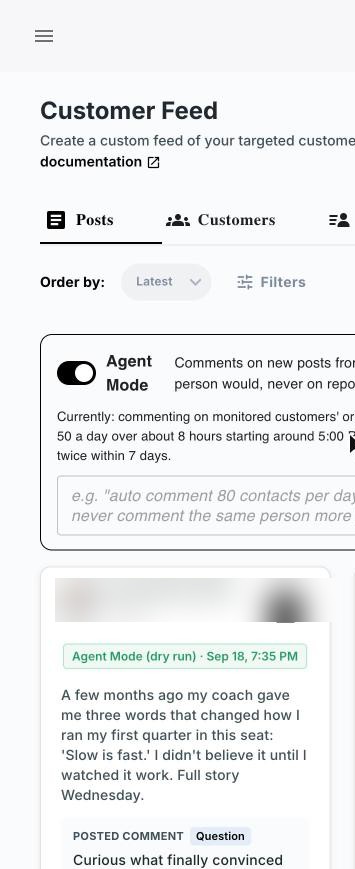
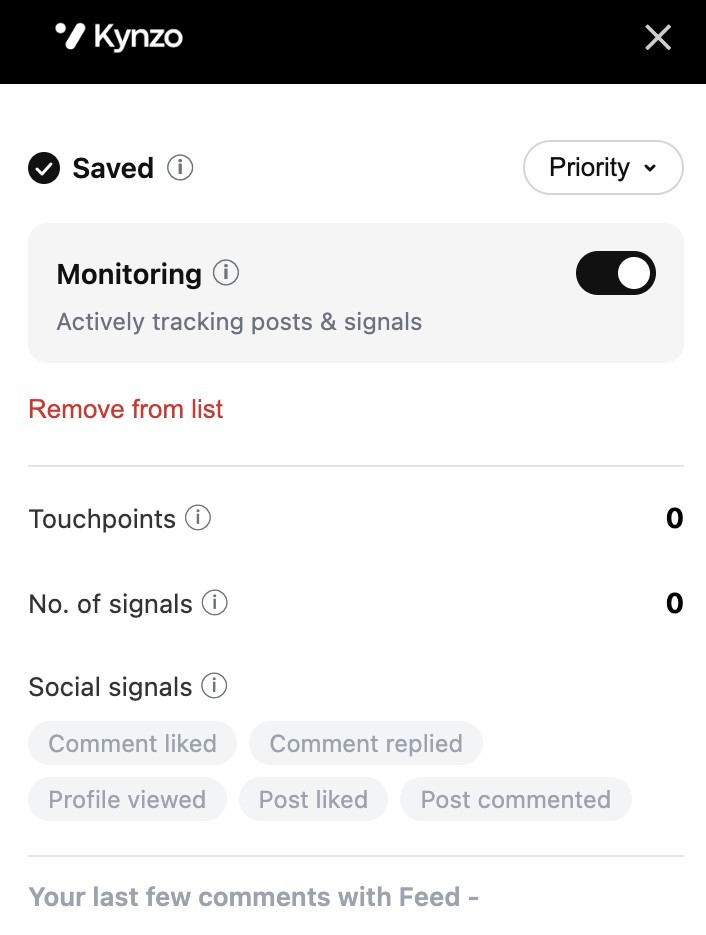
Kynzo's agents monitor live buyer signals, hiring triggers and strategic shifts around the clock, so the worksheet is populated as events happen instead of the Monday after.
Stage 3: Engage with the A-A-O framework
The A-A-O framework keeps each touch short and useful. It stands for Acknowledge, Add Perspective, Earn Familiarity.

Acknowledge
Show you noticed something specific and real. Not "love what you're doing at Acme" but a reference to a decision, a post or a launch. One sentence, no flattery.
Add perspective
Offer a point of view from your side of the market that the buyer can use. A pattern you have seen across similar companies, a counterpoint, a data point. This is the peer voice: someone who understands the problem, not someone pitching a fix.
Earn familiarity
Do not ask for time. The goal of the touch is recognition. After three or four of these, your name is attached to something useful, and a later request for a short intro call reads as a continuation, not an interruption.
An example
Say a target account's new VP of Sales has posted about rebuilding the outbound motion after a team expansion.
- *Acknowledge: "Rebuilding outbound while the team doubles is the hard version of this problem."
- *Add perspective: "The teams we see handle it best narrow to a short account list first, then widen once reply quality holds."
- *Earn familiarity: no ask. The next touch, two weeks later, references a different signal.
Notice what is missing: a meeting link, a product description, a deadline. Those belong to the handoff, not the warm-up.
Channels and the support role
Most warming happens where buyers already are: LinkedIn comments and replies, light email threads and, for Tier A, other channels your team uses. Winters makes a useful point here: phone still does heavy lifting because AI has flooded inboxes and feeds with personalized-looking noise , and email and LinkedIn work best staying visible between calls. Treat warming as the support layer that makes your calls and intros land, and write each touch so it could not be mistaken for a template.
For LinkedIn specifically, see how to build an account-based LinkedIn program and which engagement metrics are worth tracking.
Stage 4: Set a human cadence
Cadence is where automation most often gives itself away. Two rules cover most of it.
- *Operate in the buyer's business hours. A comment that arrives at 3 a.m. local time looks like a script.
- *Vary the rhythm and cap the volume. Natural jitter in timing and a daily cap per account and per user keep activity looking like a person with a full calendar.
A workable starting pattern for a Tier A account:
| Week | Touch | Purpose | |---|---|---| | 1 | One acknowledgment tied to a confirmed signal | Be seen | | 2 | One perspective touch on a related topic | Be useful | | 3 | A second contact at the account gets a touch | Widen the committee | | 4 | Readiness review | Decide: hand off, hold or continue |
That is a starting point, not a law. Adjust it to your sales cycle and the account's own activity. Our guide to LinkedIn outreach cadence goes deeper on pacing.
Kynzo agents run 24/7 inside local business hours with natural human jitter and daily caps, in either Copilot mode (you approve each touch) or Autonomous AI Agent mode. Neither requires burner domains, and there is no spam sequence behind either.
Know when an account is ready
The most common mistake after a good warm-up is asking too early or too late. You need a readiness score, not a feeling.
Useful inputs to measure for each account:
- *Engagement from the buyer: replies, reactions, profile views, connection accepts.
- *Breadth: how many people on the buying group have engaged.
- *Signal strength: a fresh, confirmed trigger tied to your use case.
- *Prior relationship: product usage, past opportunity or an existing contact.
- *Recency: all of the above weighted toward the last two to three weeks.
Buyer groups are not single people. Gartner's often-cited figure is that a typical complex B2B purchase involves six to ten decision-makers , so one reply from one contact is a start, not readiness.
Kynzo scores buyer readiness in real time. When an account crosses 90° readiness, it writes the activity back to your CRM or data warehouse and sends an instant Slack warm handoff alert in #gtm-warm-handoffs with a ready-to-send warm opener, so the rep opens the conversation with context instead of a blank page.
What a good handoff contains
- The signal that triggered it and where it was confirmed.
- Who engaged, with what, and when.
- The perspective already shared, so the rep does not repeat it.
- A proposed opener that references the shared history.
- The CRM record updated with all of it.
If any of these is missing, reps default to a cold opener and the warm-up is wasted.
Common mistakes to avoid
- *Warming a list you have no relationship with. Start with first-party data.
- *Acting on an unconfirmed signal. Verify before you reference it.
- *Asking in the first touch. Warm-up touches carry no ask.
- *Running warm-up and cold sequences at once on the same contact. The buyer sees both and trusts neither.
- *Letting activity live outside the CRM. If it is not written back, the next rep starts over.
How Kynzo runs account warming
Kynzo is the AI Account Agent for Warm Outbound, built for B2B sales teams, from founders and SDRs to AEs, RevOps leaders and VPs of Sales. It connects to your CRM, warehouse, inbox, product usage and contact lists, tracks live signals, applies A-A-O in an executive peer voice, scores readiness and hands off in Slack with two-way CRM writeback.
Plans are published on the pricing page :
- *Individual: $100/month for 1 user and 10,000 accounts monitored.
- *Team: $250/month for up to 50 users, with 10,000 accounts per user.
- *Enterprise: custom pricing for unlimited users and accounts, with Snowflake, BigQuery and Databricks sync, SAML/SCIM/SSO and a dedicated forward-deployed engineer.
There is a 14-day free trial, and no credit card is required.
[

](https://apps.kynzo.io/Onboarding/CreateAccount)
To start, see Kynzo's plans and connect the first Tier A accounts from your CRM.
Is cold email still worth running?
Cold email still produces replies, but the economics have tightened: low average reply rates, strict inbox-provider expectations and buyers who ignore anything that reads as automated. Warming changes the math by raising the odds that the first direct message is recognized. Teams that warm their Tier A accounts first can keep direct email for the moment a buyer has already seen their name.
FAQ
What is the difference between warm and cold outreach?
Cold outreach contacts a buyer who has no prior exposure to you. Warm outreach follows earlier, useful interactions: a comment, a shared connection, product usage or a prior conversation. The message itself may be similar, but the recognition behind it is not.
How long should I warm an account before reaching out?
For Tier A accounts, a common pattern is three to four weeks of light, spaced touches across more than one contact. The better rule is readiness: move when the buyer engages and a fresh signal is confirmed, not when a calendar day arrives.
How many touches does it take to warm up a decision-maker?
There is no universal number. A few relevant touches spread over several weeks is usually enough for recognition, and a reply or profile view from the buyer is the stronger sign. Kynzo scores readiness in real time so you act on engagement rather than a fixed count.
Can AI warm up accounts without feeling automated?
Yes, when it works from your own data, uses confirmed signals, writes in a peer voice, stays within local business hours and respects daily caps. Copilot mode lets you approve each touch while Autonomous mode runs within those same limits.
Sources
- Saleshandy cold email reply rate analysis, as reported by Happenstance
- 12 Account Signals for Prioritising B2B Outreach, Hatchlee
- B2B Outbound Prospecting Strategy, Abstrakt
- LinkedIn Buying Committee: Multi-Thread to Win 2026, ConnectSafely.ai